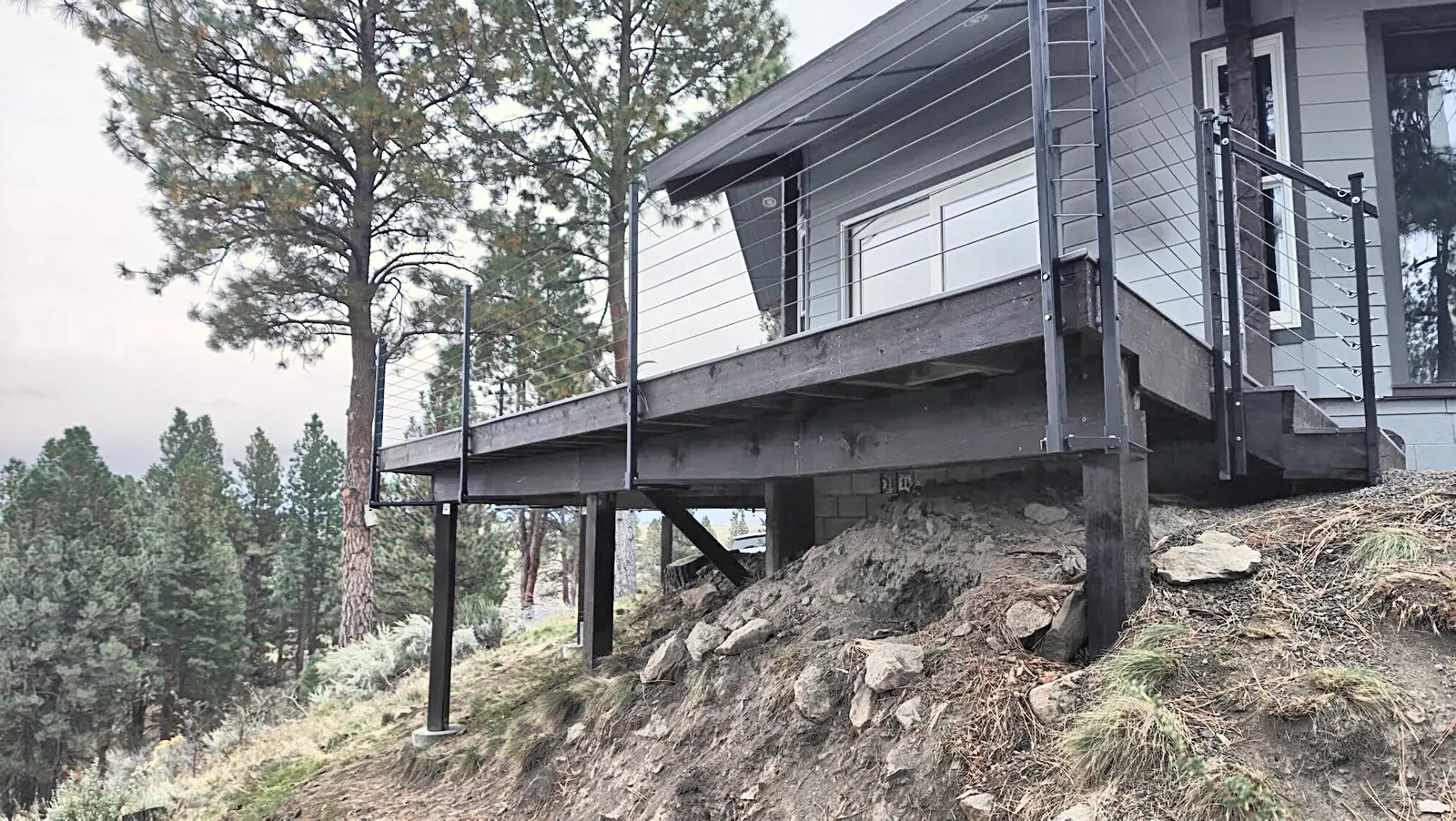
A damaged deck board is easy to notice. The framing under it isn’t always so obvious. That’s why a deck repair should start with more than picking a replacement board and matching the color.
The real question is how far the damage goes. Is it just the surface, or does it reach the joists, beams, posts, stairs or the connection to the house? Until we know that, a materials list is just a guess.
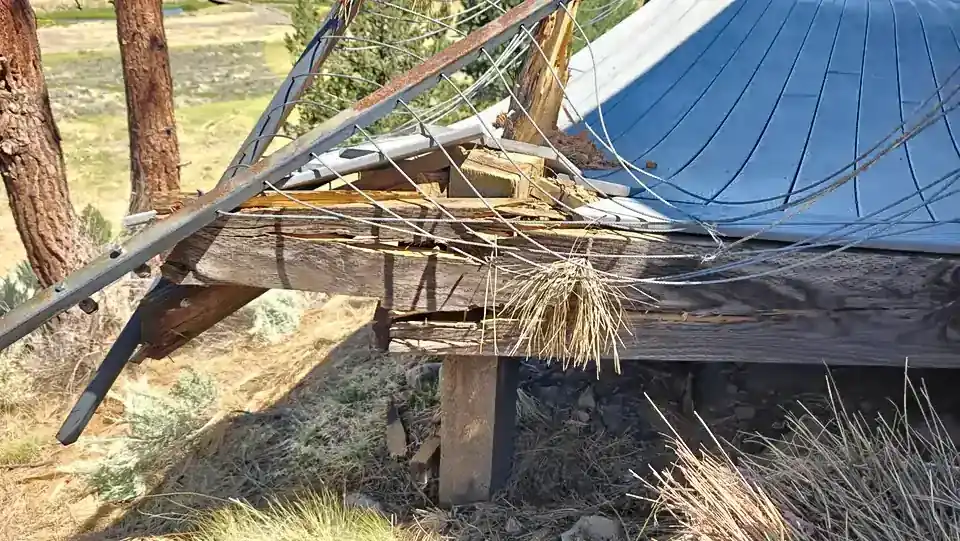
Separate the surface from the structure
Decking and framing do different jobs. A surface can look worn while the framing is still fine. The opposite happens too: fresh boards can hide a problem underneath.
A good assessment looks at the framing and connections you can get to, not just the walking surface. Spots where water collects deserve extra attention. So do the transitions at the house, the stairs and the posts. Sometimes we have to open up part of the deck to see what really needs fixing.
If a deck moves when it shouldn’t, has a loose railing or shows serious damage, keep people off that area until it’s been looked at. Don’t test it by putting more weight on it.
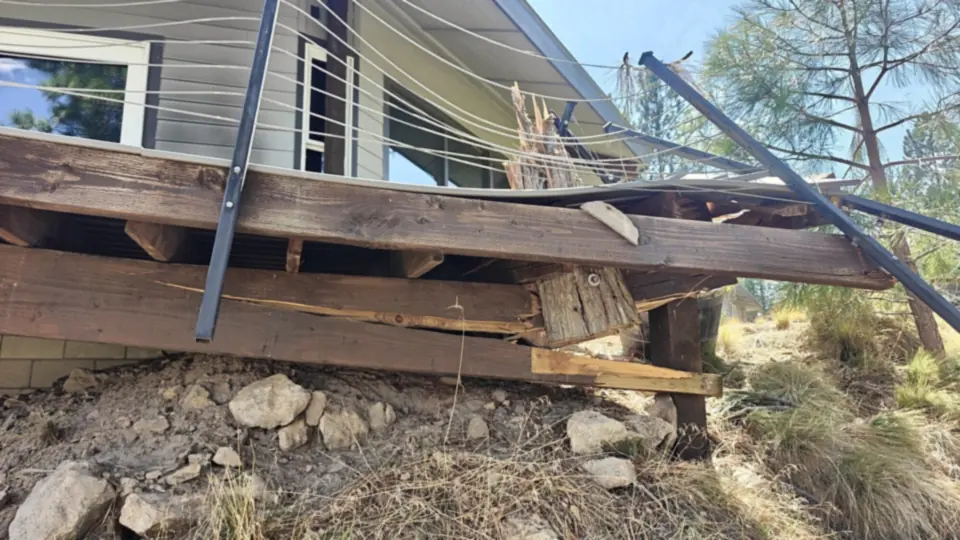
Work out why the damage happened
If you replace damaged material without fixing the cause, the next repair is waiting in the same spot. Water, ground contact, failed connections or an impact can each call for a different fix.
That doesn’t mean every repair needs a full rebuild. It means the decision should come from the condition of the deck, not from a photo of the worst board.
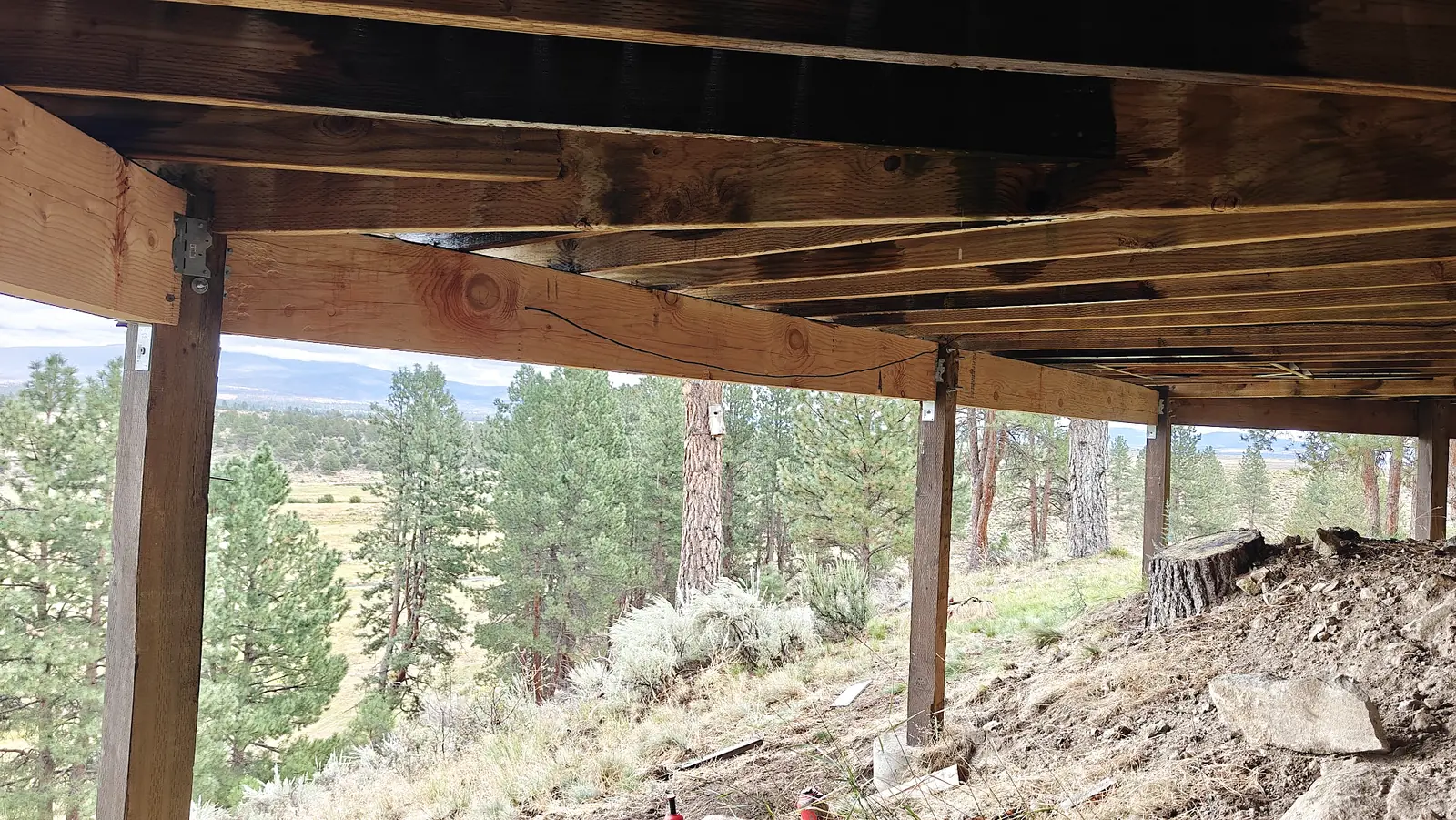
Make the estimate describe the repair
Ask what the proposal includes: boards, structural repairs, stairs, railings, connections, finishes and disposal. Also ask how damage found after work starts will be handled.
For a deck in Klamath or Lake County, a good first step is a few photos of the whole deck, the damage and the underside you can reach. They help start the conversation. An on-site look tells us what a responsible repair actually involves.